


Astana: The Stopover You Didn’t Know You Wanted
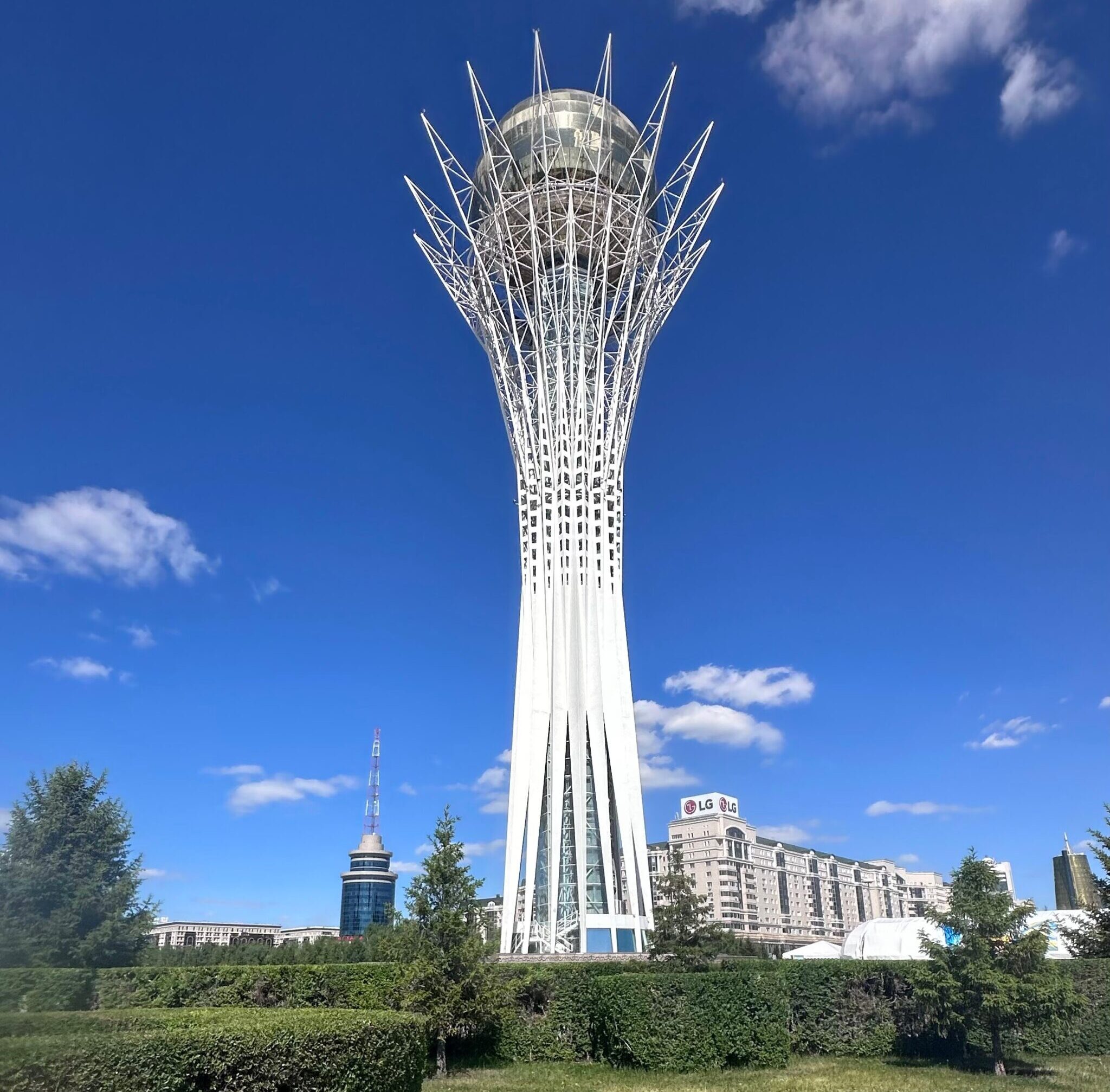
There is a gilded handprint at the top of a tower in Astana. It belongs to Nursultan Nazarbayev, the man who ruled Kazakhstan for nearly three decades, renamed the capital after himself, and was then quietly un-renamed three years later when the country decided it had had enough. The handprint, however, remains. Visitors still queue to place their palm inside it and make a wish, which is either touching, absurd, or both, depending on the angle. It is the perfect introduction to the strangest capital I have visited in years, a place I reached almost by accident via Air Astana, and where I spent four nights at the Ritz-Carlton Astana with no intention of reviewing it.
Flying from Europe to Asia has become considerably less straightforward than it once was. Russian airspace closures, intermittent Gulf airspace closures, hub airports that now resemble refugee processing centres, and routings that loop you halfway around the planet have made even premium travel feel like an endurance test. In an age when even the simplest journey involves visas, pre-arrival forms, health declarations, QR codes and assorted bureaucratic theatre, Kazakhstan felt almost radical in its simplicity. I booked a flight, went, showed my passport, no questions asked. How civilised.
The airline itself was another surprise. Air Astana's modern Airbus A321LR fleet has quietly become a sensible way of travelling between Europe and Asia, particularly for those who value efficiency over the gilded pantomime of certain Gulf carriers. The network is broader than many realise, with onward connections from Astana to Beijing, Seoul, Tokyo and a string of other major Asian cities, which makes the stopover genuinely useful rather than merely eccentric. The airport itself is small and not especially exciting, but small turns out to be its own kind of luxury: you walk off the aircraft and out to the kerb without internal monorails, shuttle buses, or the brisk forced march through duty-free that passes for hospitality at larger hubs. The newer business class seats are especially worth seeking out, offering a level of privacy and comfort that holds its own against far larger carriers on these routes. Not every aircraft features the latest cabin, however, so it is worth paying attention to the configuration when booking, unless you enjoy surprises of the wrong sort.
There is a gilded handprint of a deposed president at the top of a tower in Astana — the perfect introduction to the strangest capital I've visited in years, reached almost by accident via Air Astana and the Ritz-Carlton . . .
Please register as a member or log-in to view this content.
Join our membership
or