


The End of the Free Welcome
Check-in came with the now-obligatory welcome macaron, that universal shorthand for hotel hospitality’s creative drought. Not so long ago, I was complaining—only half-jokingly—that I couldn’t face another one. I’ve never particularly liked them and, unless you’re in Paris, they rarely make sense. Yet in today’s monetised hospitality, I’d gladly take a macaron over nothing—or worse, something cynically rebranded as a “curated arrival amenity.”
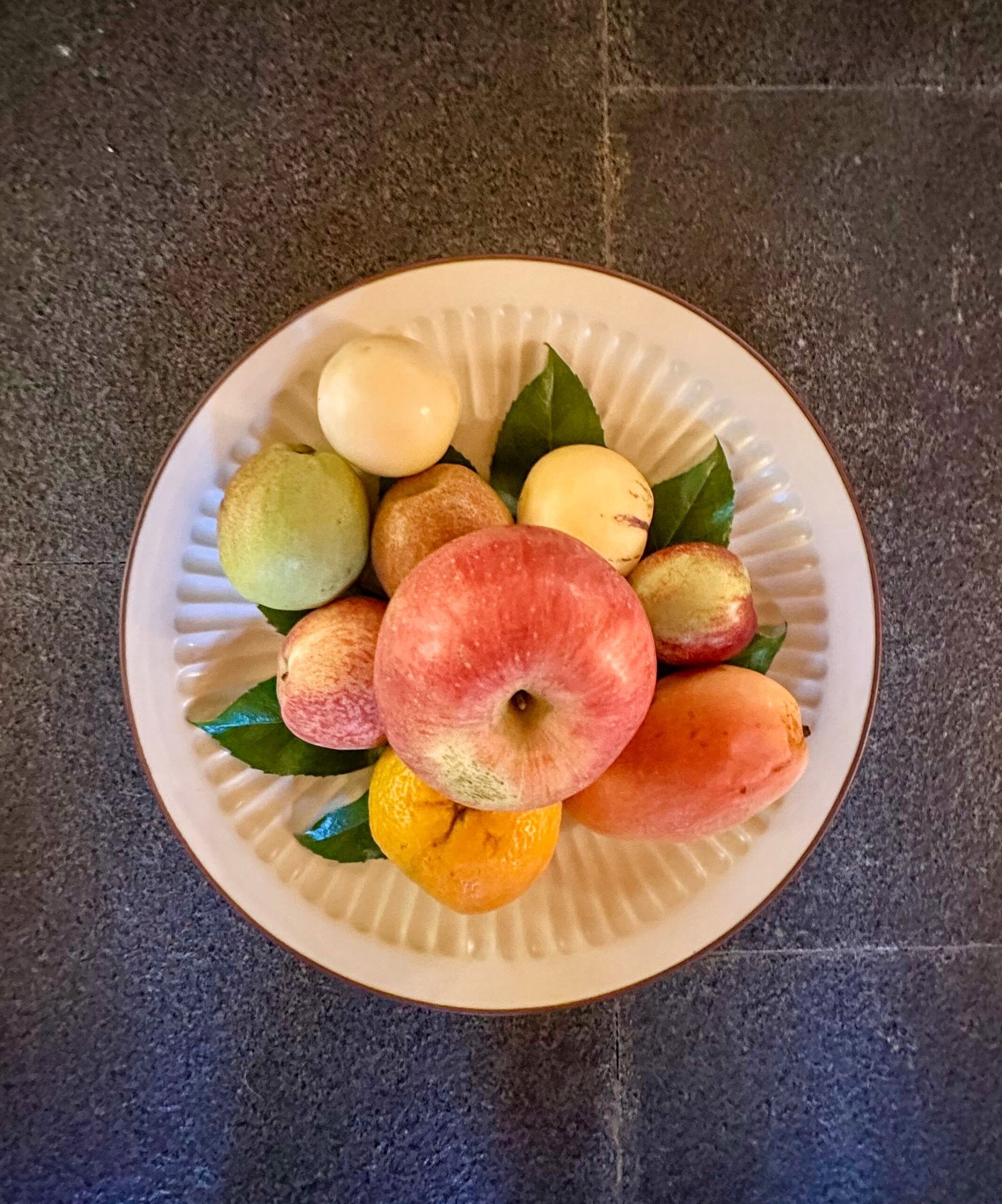
A recent trip to China showed just how global the malaise has become. In most hotels, the “grand gesture” was two apples and a few lychees, unceremoniously abandoned on a plate, as though procured in a last-minute dash to the nearest supermarket. Only in Japan—where fruit is treated with the reverence of fine porcelain (and priced accordingly)—did anything feel intentional. One property in Shanghai stood out: fruit beautifully arranged, refreshed, and clearly not an afterthought. Elegant. Effortful. Rare.
The point isn’t extravagance—it’s intent. If you must economise, do it with a sense of place. A miniature bottle of olive oil in Tuscany. A slip of local ceramic in the Cyclades. A jar of honey from two villages over. These aren’t costly, but they say: we know where we are, and we know you’ve arrived.
The welcome amenity once defined hospitality: a gesture that said you matter here. From a jar of local honey to a handwritten note, it was never about cost, but intent. Today, in many luxury hotels, that quiet kindness has been rebranded as an “arrival amenity” — and billed to your account. What began at Four Seasons has spread industry-wide: €70 fruit baskets, $65 chocolate-dipped strawberries, €50 pastries. Lavish gestures still exist, but only for influencers. Regular guests are left with a price list. The instinct to give hasn’t disappeared, only been redirected. In this editorial, The Gallivanter’s . . .
Please register as a member or log-in to view this content.
Join our membership
or