


I’ve just returned from a trip to south East Asia, staying in several luxury resorts, all proudly proclaiming their commitment to sustainability. You know the kind: “eco-conscious” plastered everywhere, sustainability pledges prominently featured alongside glossy marketing buzzwords.
Initially, I was encouraged. In every suite, I found hotels offering their own branded, filtered water—exactly as it should be: no unnecessary plastic, no imported water flown halfway around the world. A small but meaningful gesture, or so it seemed.
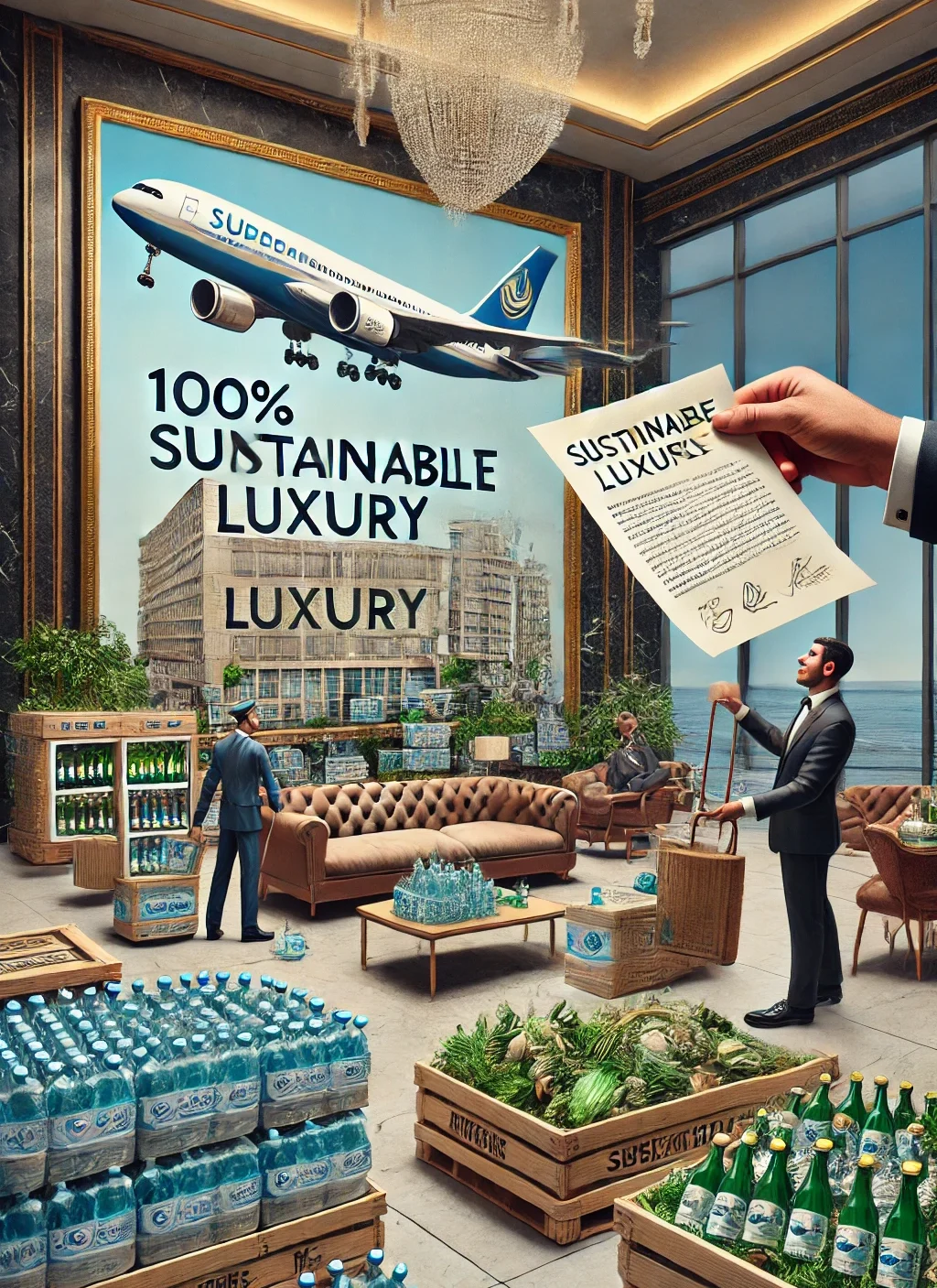
However, once I stepped outside my suite, the illusion quickly fell apart. At every restaurant, the bottled water options were Nestlé’s Aqua Panna or San Pellegrino, both flown in from Italy, a mere 10,000 kilometres away. And, naturally, priced as if they’d been transported by private jet, complete with a carbon footprint the size of a small nation. Why was it so difficult to find genuinely sustainable water options outside my suite?
When I asked for locally sourced alternatives, I faced repeated refusals. Eventually, one hotel gave in, but why did it have to be such a struggle? It’s difficult to accept the sincerity of sustainability claims when hotels insist on shipping water from the other side of the globe, particularly when perfectly good alternatives are readily available.
Granted, sourcing reliable, safe local water can be challenging in some areas, but filtered water—already used in guest rooms—is an obvious solution. If it works for suites, surely it can work in restaurants. Yet hotels continue to opt for prestigious, imported brands, sacrificing real sustainability for perceived exclusivity—one overpriced bottle at a time.
Nestlé, of course, is particularly troubling. Known globally for controversies around water privatisation and extraction, their ethical record sits uncomfortably alongside luxury hotels claiming to prioritise sustainability. It’s hard to overlook such a glaring contradiction.
But then, contradictions seem inherent to sustainability in luxury hospitality. General Managers have privately admitted to me the near-impossibility of truly sustainable luxury: heated private pools, lavish breakfast buffets generating enormous waste, and fleets of idling SUVs outside receptions hardly align with “eco-conscious” ideals.
And then there are those charming hotel gardens, proudly labelled ‘organic’ and showcased prominently. Dig a little deeper, and you’ll typically find these gardens are more decorative than practical, rarely providing anything beyond a single mojito garnish. In recent memory,Il San Pietro di Positano’s gardens are among the rare exceptions—actually large enough to meaningfully supply the kitchen—but these remain a rarity.
The now ubiquitous towel and sheet reuse initiative is another example. Hotels encourage guests to reuse linens under the guise of sustainability. But when I’m paying over $1,000 a night, I don’t want sustainability to mean fewer amenities or reduced service. In fact, I’d expect my towels and sheets changed twice daily—that’s part of the luxury I pay for. While framed as environmental stewardship, it often feels more like a convenient cost-saving measure. In some cases, guests aren’t even given a clear choice; housekeeping quietly adopts this policy as standard practice.
Let me clarify: I’m not against genuine sustainability initiatives—I fully support them. What frustrates me is selective sustainability, initiatives chosen primarily for marketing or cost reduction rather than real environmental impact. If luxury hotels genuinely aim to make a difference, they need to start with fundamentals: local sourcing, meaningful waste reduction, and thoughtful construction. Merely skipping a daily linen change doesn’t offset heating countless private plunge pools or importing bottled water from 10,000 kilometres away.
There’s also a troubling trend where hotel brands prominently display their eco-credentials while simultaneously building massive resorts in untouched areas. Pristine beaches, remote islands, and fragile ecosystems are often cleared in the name of “sustainable development.” Solar panels and bamboo straws do little to reverse the damage of deforestation or the environmental cost of artificial golf courses in drought-prone regions—no matter how ‘green’ their watering methods claim to be.
Travellers, especially younger generations, increasingly express a desire for authenticity, sustainability, and local engagement. Yet, many travellers rarely question the authenticity behind sustainability claims. Booking a property for its eco-friendly façade without investigating deeper is not genuine sustainability; it’s simply comforting optics. How many are content to tick the ‘ethical travel’ box by booking a resort with a recycled wooden deck while still expecting air-conditioned safari transfers and an organic wine selection shipped from Europe?
Of course, I acknowledge the elephant in the room and my own irony here. As Editor-in-Chief of a luxury hotel publication, I critique properties that inherently rely on high consumption and long-haul travel. Long-haul flights, indulgent experiences, and high-consumption lifestyles don’t exactly scream ‘carbon neutral.’ But at least let’s not pretend that a recycled cocktail napkin offsets it.
Ultimately, luxury and sustainability can coexist, but only if hotels move beyond slogans and superficial gestures. Real sustainability requires real commitment. Until that happens, sustainability claims will remain what many sadly are today—little more than another marketing strategy.
Happy Gallivanting!