When I was a child, returning to a hotel room after dinner came with one small but important question: what chocolate would be waiting on the pillow? The bed would have been turned down, the room somehow transformed from its daytime state into something softer and more inviting, and there, invariably, would be a little square of chocolate. I was already particular. I hoped for at least 70 per cent cocoa — still my minimum today — and was invariably disappointed when somebody had the ludicrous idea of leaving mint chocolate instead. It was a tiny thing, of course, but I looked forward to it, and that, surely, was the point.
I have been thinking about this lately, and not because turndown has disappeared. Almost every hotel I stay in still performs one. What has changed is that so few of them appear to be for anybody in particular. More strangely still, some of the hotel groups that talk most insistently about authenticity, storytelling and sense of place are precisely the ones whose turndowns tell you nothing whatsoever about where you are. The best I have experienced recently was in Mexico, where the evening service was impeccable. Asia is probably the only continent where turndown is still taken consistently seriously; elsewhere, with a few notable exceptions, I increasingly feel as though I am being handed the same evening wherever in the world I happen to be.
What makes this especially odd is that many of the same hotels perform superb daytime housekeeping. Rooms are cleaned beautifully, bathrooms reset with care, belongings neatly arranged, towels folded and everything exactly where it should be. There is often real precision and pride in the morning service. Then night comes and somehow the standards collapse.
I know the defence, because I have heard it often enough: staffing. Night housekeeping has been cut, shifts are split, labour is expensive and guests, apparently, no longer notice. But these are choices too, and they are choices made at both ends of the same day. A hotel that produces an immaculate room at eleven in the morning has already demonstrated that it understands the required standard. If it manages considerably less at eight in the evening, somebody has decided that the evening matters less.
On my most recent trip I stayed at five boutique hotels. The largest had 33 rooms; the smallest just nine. Every one of them performed turndown, but most did little more than perform it. The bed was opened — surprisingly often on both sides even though I was travelling alone — towels were replaced and not much else happened. Slippers were rarely positioned beside the bed, bath mats were absent, toiletries and personal belongings on the bathroom counter remained exactly where I had left them. Too often, turndown feels like a race to get into the room, open the bed, replace the towels and get out again. When did this become enough?
Aman understood turndown particularly well. To a large extent it still does. Those little gifts associated with the destination — something handmade, something edible, a bookmark, a small object or simply a card telling a story about the place — were never expensive in themselves. Their value was emotional. You returned from dinner wondering what might be waiting for you that evening. I still have some of those Aman mementos at home, and whenever I come across one it immediately takes me back to the stay. You would think hotels, with all the talk these days about creating lasting memories, would understand the value of that. Something genuinely of the place can stay with you for years. A bottle of Acqua Panna on the bedside table does not quite achieve the same thing.
Airelles is another group that understands this particularly well, with thoughtful little gifts that feel like part of the stay rather than an afterthought. At the other end of the spectrum are the hotels that leave a couple of spa-product samples beside the bed with a card offering 20 per cent off a treatment the following day. That is not a turndown gift; it is an upsell. I have never liked it. The whole point of a small evening gesture is that it should feel generous, not transactional. The moment the “gift” comes with an inducement to spend more money, the spell is broken.
Nor does any of this need to cost much. A homemade local sweet, something the chef has prepared especially for the evening, a small object made nearby — it simply needs to feel connected to the hotel and the place.
Which is why I find it so puzzling at groups that build their identity around exactly that. At an Auberge property I stayed at recently, enormous emphasis was placed on the local architects, the interior designer, the furniture and the materials, all proudly rooted in the destination. The turndown itself was good, but that sense of place disappeared from the evening ritual, which surprised me from a group that used to be rather good at precisely this.
Rosewood is an even more obvious example. “A Sense of Place” is not merely part of its marketing language; it is the philosophy on which the brand has built much of its identity. Yet its turndowns are, in my experience, often remarkably generic and perfunctory. If any hotel group should understand the opportunity to remind you where you are at the end of the day, surely it is Rosewood. Capella, by contrast, still tends to do this rather well.
Four Seasons is generally efficient but rarely ventures beyond the strict minimum. The slippers, incidentally, may be the worst in the luxury hotel industry, and even the bedside mats tend to be those thin, functional ones rather than the wonderfully cushioned kind that actually make stepping out of bed feel like part of the experience. I remember staying at a Four Seasons years ago and finding a tray on the bed at turndown with the laundry bag and shoeshine bag neatly laid out. Hardly revolutionary, but clever: put the shoeshine bag in front of me and I am far more likely to think about having my shoes polished than if it remains hidden in a wardrobe drawer. It was practical, anticipatory and part of preparing the room for the next day. Somewhere along the way, somebody — a bean counter, most likely — decided even that little touch was unnecessary. These may sound like absurdly small details, but luxury is made up of absurdly small details.
And then there are hotels that have apparently decided turndown is no longer necessary at all. I recently stayed at a boutique hotel in Spain carrying Three Michelin Keys, which I review in a forthcoming issue. Not one Key. Three. Michelin describes that highest distinction as an “extraordinary stay”, representing the ultimate in comfort and service, style and elegance — one of the world’s most remarkable hotels and a destination worthy of a trip in itself. There was no turndown. Initially, I assumed they had forgotten it. They hadn’t. They simply don’t offer one. Extraordinary indeed.
What makes all this slightly maddening is that creating a memorable turndown does not require a huge budget. At The Telegraph, which I reviewed only a few months ago, a single rose was left on the bed each evening. It was simple, pretty and memorable. That was enough.
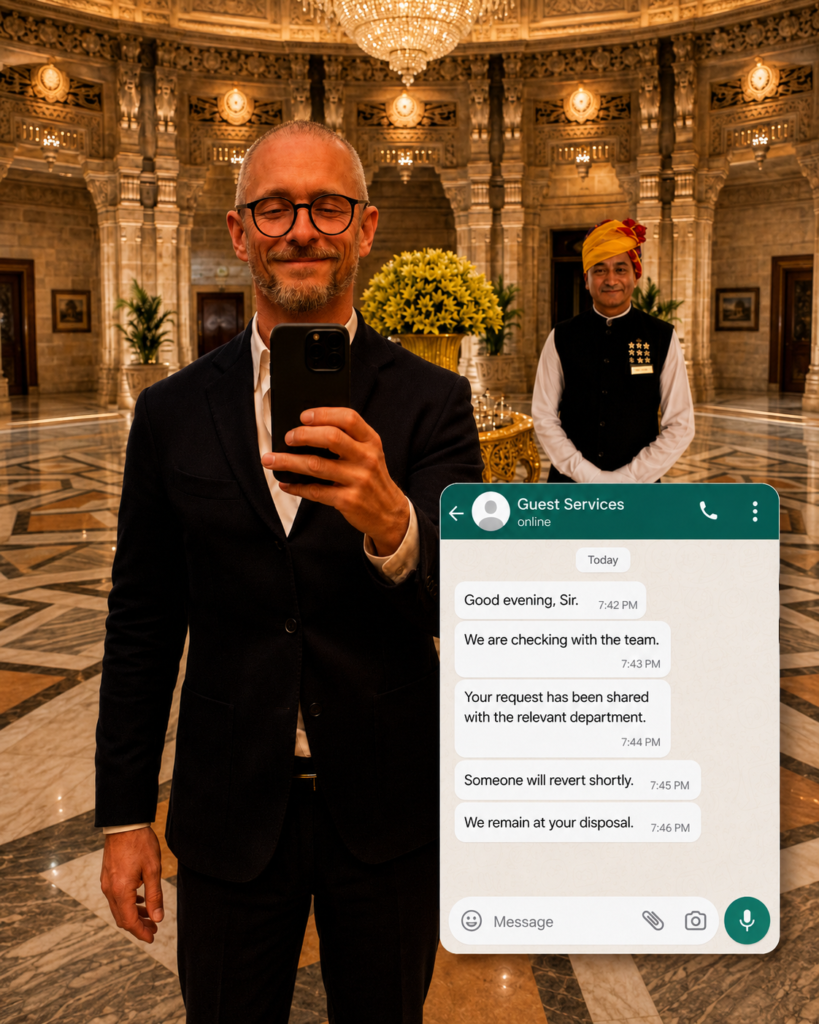
There is another side to the problem, however, and it is even more basic: timing. How many times has somebody appeared at 5pm — often two hours before I even think about showering and changing for dinner — clutching two macarons and a couple of bottles of water and rather obviously hoping I will accept them at the door so they don’t have to come back later? That is not turndown; it is housekeeping trying to get turndown out of the way. And how many times have I then returned from dinner to find that nobody has been into the room at all?
This happens remarkably often. It is irritating in a 300-room resort. In a hotel with twelve suites, it is almost inexplicable. At one such property, which I review shortly, I ate dinner in the hotel itself and returned to my room at around 9.30pm. No turndown had taken place. The hotel knew exactly where I was. I had a dinner reservation. Their restaurant knew when I arrived, where I was sitting and presumably when I left. Yet apparently transferring the useful information that I was downstairs having dinner to the person responsible for servicing my room proved beyond the capabilities of the operation.
Luxury hotels have invested fortunes in technology designed to anticipate our every desire, yet coordinating housekeeping with an in-house dinner reservation can sometimes seem more complicated than launching a satellite. Smaller hotels have even less excuse. If you have nine, twelve or twenty rooms, how difficult can it really be to know roughly when your guests would like them serviced? Indeed, why not simply ask? We are asked at check-in what time we would like breakfast, whether we have allergies, where we are having dinner, what temperature we prefer the room and occasionally what type of pillow we sleep on. Why not ask when we would like turndown? Some hotels do. I cannot remember the last time one asked me.
Perhaps that is the real problem. Somewhere along the way, turndown stopped being regarded as an opportunity to delight the guest and became another housekeeping procedure: open bed, replace towels, close curtains, water by bed, job done. Yet staying in a great hotel should be about a succession of moments — the welcome, discovering the room, the drink before dinner, returning later that evening. Even going to bed can, and should, carry a little sense of occasion.
The best turndowns understand that the room you left at seven o’clock should not feel exactly like the room you return to three hours later. The bathroom has been reset, your slippers are waiting, water is within reach. Perhaps there is something beside the bed that makes you smile. Nothing extravagant, just evidence that somebody has thought about your return.
Hospitality is increasingly full of grand promises about personalisation, storytelling, emotional connection, authenticity and sense of place. Yet some of the most convincing expressions of all of them cost little more than a homemade sweet, something the chef has prepared, a small local object or a single rose placed on a bed.
Turndown is the final act of the hotel day, and the hotels that still understand this are not, on the whole, the ones spending the most money telling you they do.
The child I was walked into the room and looked at the bed first, hoping for seventy per cent and braced for mint. I have stopped looking. That is what I mind — not the missing chocolate, but that I no longer expect anything to be there.